


Commercial Vehicle Transport: What It Costs and How It Works
Commercial vehicle transport typically costs $0.40–$2.00 per mile, less per unit for fleet batches. See what counts, pricing factors, and how Top1 handles it.
- Commercial Shipping
- Fleet
- Pricing
- How It Works
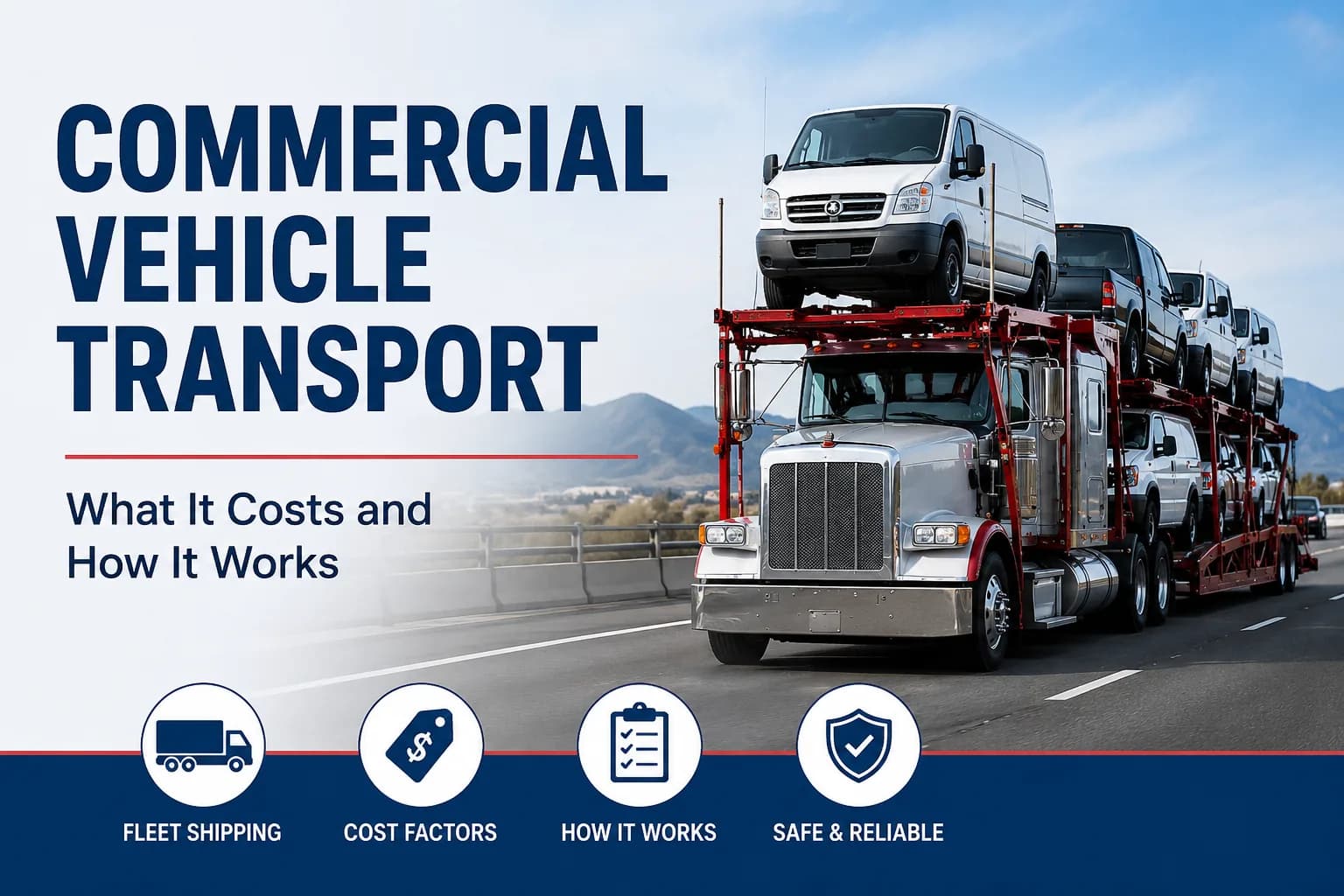
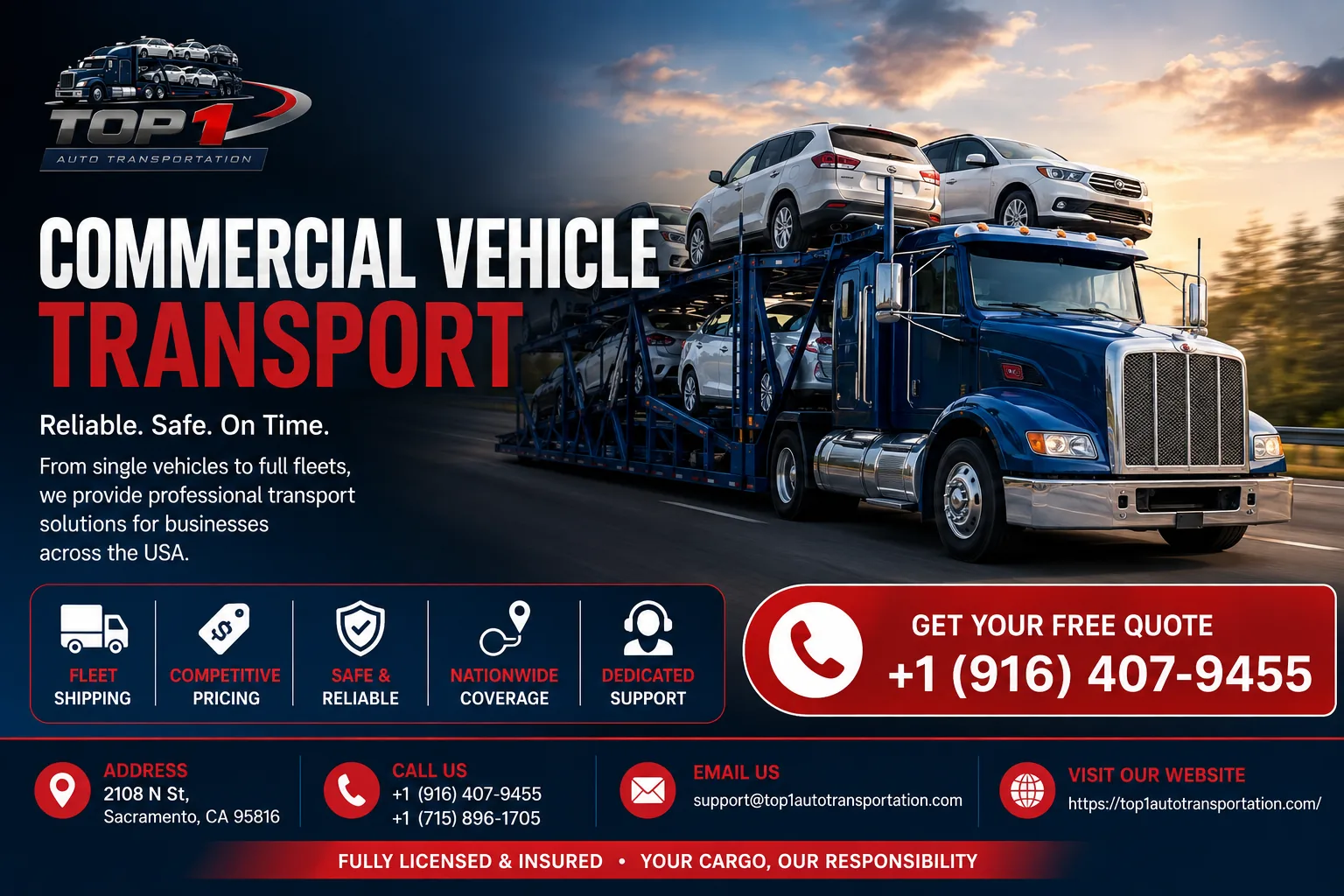
Commercial vehicle transport covers shipping business-owned vehicles, like box trucks, work vans, service trucks, fleet cars, and specialty equipment, rather than a single personal vehicle. Pricing typically runs $0.40 to $2.00 per mile for a single unit, with the per-mile rate dropping as you ship more vehicles at once on a coordinated route. Whether you're relocating a company fleet, moving dealership inventory, or shipping one oversized work truck, the process differs in a few important ways from standard personal car shipping. Here's how it actually works, and how Top1 Auto Transportation handles it.
Quick facts: commercial vehicle transport
| Factor | Typical range |
|---|---|
| Single standard vehicle | $0.40 – $2.00 per mile |
| Multi-vehicle / fleet batch | $0.38 – $1.10 per mile per vehicle |
| Enclosed premium | Adds 30 – 50% |
| Best default option | Open car transport |
| Fleet & dealer moves | Dealer auto transport |
Ready to move one work truck or a full fleet? Get a free commercial shipping quote.
What Counts as a Commercial Vehicle for Transport Purposes
"Commercial vehicle transport" covers a broader category than most people expect. It generally includes:
- Fleet cars and sedans used by rental companies, corporate fleets, or service businesses.
- Vans and cargo vans, including delivery and passenger configurations.
- Box trucks and straight trucks, common for moving and delivery businesses.
- Pickup trucks used commercially, including work trucks outfitted with tool boxes or racks. See our truck and oversized vehicle shipping page for how these get matched to the right equipment.
- Buses and shuttle vehicles.
- Specialty and branded vehicles, such as food trucks or company-wrapped vehicles.
- Dealership and auction inventory, shipped in bulk between locations.
- Construction and off-road equipment, when it needs to move between job sites or states.
The common thread is that these vehicles are owned or operated by a business rather than an individual, which changes some of the logistics, documentation, and pricing structure compared to shipping a personal car.
How Much Does Commercial Vehicle Transport Cost?
| Situation | Typical Pricing |
|---|---|
| Single standard vehicle (sedan, van) | $0.40 to $2.00 per mile |
| Multiple vehicles, same route (fleet or batch) | $0.38 to $1.10 per mile per vehicle |
| Oversized unit (box truck, bus, heavy equipment) | Base rate plus size and weight surcharge |
| Enclosed transport | Adds 30 to 50% to the base rate |
The biggest difference from personal car shipping is the batching effect. Shipping ten vehicles on a coordinated route costs meaningfully less per vehicle than shipping ten separate cars individually, since carriers can fill a truck efficiently rather than running partial loads. A flexible 5 to 7 day pickup window also tends to lower the per-vehicle rate, since it gives carriers room to plan an efficient route rather than requiring a dedicated, tightly scheduled trip.
Top1 Auto Transportation doesn't charge anything upfront on any shipment, commercial or personal. You get a quote, we assign a vetted, FMCSA-licensed carrier, and payment is only collected once a driver is locked in. No driver, no charge.
What Affects Your Commercial Vehicle Transport Quote
- Vehicle size and weight. Box trucks, buses, and heavy equipment often require specialized trailers or permits, which adds cost beyond standard car-carrier pricing.
- Number of vehicles and locations. A single coordinated fleet move, even across multiple pickup points, typically prices better per vehicle than several separate individual shipments.
- Route and accessibility. Oversized vehicles moving through weight-restricted roads or dense urban areas may need permits or route adjustments that standard car shipments don't require.
- Open vs. enclosed. Open transport is the standard and most cost-effective choice for most fleets. Enclosed transport is typically reserved for new vehicle rollouts, branded vehicles, or anything needing extra protection from weather and road debris.
- Timeline flexibility. A fixed same-day deadline across multiple locations costs more than a multi-day pickup window that lets carriers batch efficiently.
- Season and fuel costs. The same seasonal and fuel-driven pricing swings that affect a route like Alabama to Texas or any other single-vehicle shipment apply here too, just distributed across more vehicles.
Single Vehicle vs. Fleet Shipments
If you're moving one commercial vehicle, the process looks close to standard car shipping. You provide pickup and delivery details and vehicle information, a carrier gets assigned, and the vehicle is delivered, with the main differences being vehicle size and possibly the need for specific documentation on an oversized unit. Our how it works page covers those same three steps.
If you're coordinating multiple vehicles, whether that's a dealership sending inventory to another lot, a company relocating a regional fleet, or a construction firm moving equipment between job sites, batching the shipment matters. Consolidating vehicles into one coordinated move rather than several separate trips is the most effective way to bring down the cost per vehicle. It also simplifies scheduling and documentation on your end, since you're dealing with one shipment plan instead of several. This kind of coordinated, multi-vehicle move is exactly what our dealer and fleet shipping service is built around.
Who Uses Commercial Vehicle Transport Services
- Dealerships and auction houses moving inventory between locations or to buyers out of state.
- Rental car companies repositioning fleet vehicles between regions based on seasonal demand.
- Corporate fleets relocating company vehicles when opening new offices or consolidating locations.
- Construction and service companies moving work trucks or equipment between job sites in different states.
- Businesses relocating entirely, where company vehicles need to move along with the rest of the operation.
What to Prepare Before Requesting a Quote
Getting an accurate quote for commercial vehicle transport generally requires more detail upfront than a single personal car shipment:
- Vehicle count and types. Sedans, vans, box trucks, and equipment may need different trailer types, so listing exactly what's being shipped matters.
- Dimensions and weight for oversized units. This determines whether standard car-carrier equipment works or whether specialized transport and permits are needed.
- All pickup and delivery locations. Fleet moves often involve multiple origin or destination points, which affects routing and pricing.
- Your timeline and flexibility. A hard deadline versus a flexible window changes both cost and how the shipment gets scheduled.
- Vehicle condition. Running versus non-running status, existing damage, and any cargo or equipment still loaded inside all affect handling and pricing.
You can start with our instant online quote tool for a single vehicle, or contact an advisor directly for a multi-vehicle fleet move. The same advisor stays with you from quote through delivery.
Preparing the Vehicles Themselves
- Remove or secure loose cargo and tools. Work trucks and vans often carry equipment that needs to be removed or properly secured before transport, since carriers generally don't take responsibility for cargo beyond the vehicle itself.
- Document existing condition with photos, the same as you would for a personal vehicle. This matters even more on a multi-vehicle shipment, where individual inspection reports can be easy to lose track of.
- Confirm registration and any required commercial documentation is current, since a vehicle with lapsed registration or missing paperwork can delay pickup.
- Empty fuel to a reasonable minimum level, consistent with standard vehicle shipping preparation, to reduce weight without leaving the tank completely dry.
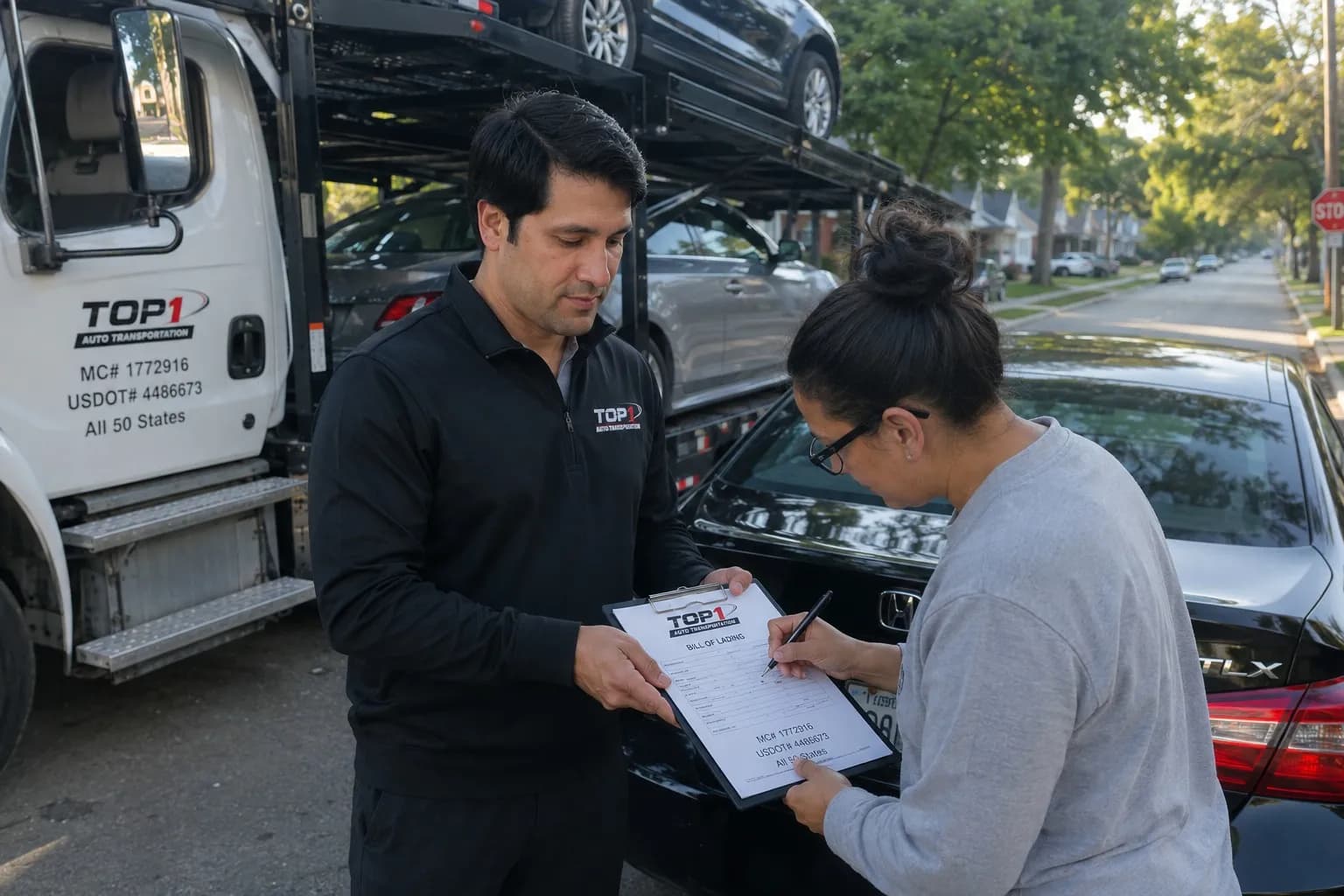
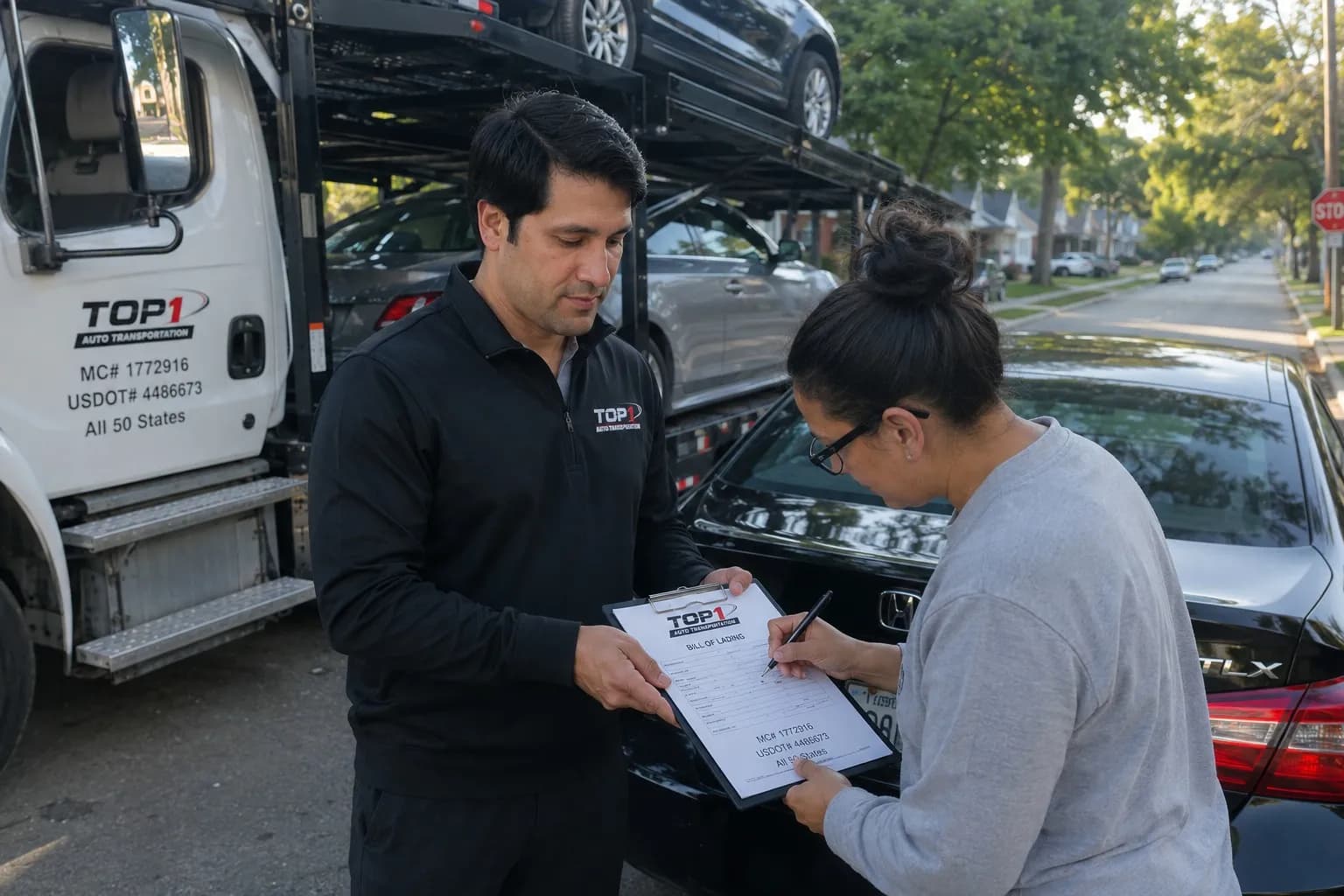
Every shipment, whether it's one work truck or a twenty-vehicle fleet move, gets a Bill of Lading at both pickup and delivery documenting condition. Read it carefully at both ends, since it's what any damage claim is based on.
Need to move a company fleet, dealership inventory, or a single work vehicle? Get a free quote or talk to a Top1 advisor about your vehicle count, types, and timeline. Top1 Auto Transportation is a licensed FMCSA broker (MC# 1772916, USDOT# 4486673) that has shipped more than 14,000 vehicles nationwide, with no upfront payment required.
Frequently Asked Questions
- What is commercial vehicle transport?
- It's the shipping of business-owned vehicles, such as fleet cars, vans, trucks, buses, or equipment, as opposed to a single personal vehicle. It typically involves different pricing, documentation, and sometimes trailer requirements.
- How much does it cost to ship a commercial vehicle?
- A single standard commercial vehicle typically runs $0.40 to $2.00 per mile, similar to personal car shipping. Multi-vehicle fleet shipments generally price lower per vehicle, often $0.38 to $1.10 per mile per unit, due to batching efficiency.
- Is shipping a fleet cheaper than shipping vehicles individually?
- Generally yes. Consolidating multiple vehicles into one coordinated shipment reduces the per-vehicle cost compared to arranging several separate individual shipments.
- Do oversized commercial vehicles need special permits to transport?
- Often yes, particularly for buses, heavy equipment, or oversized trucks, depending on size, weight, and the specific route. This is handled as part of the transport arrangement rather than something you need to arrange separately.
- Is this the same as commercial driver or vehicle licensing through my state DMV?
- No. Commercial vehicle transport refers to shipping vehicles from one location to another. Commercial driver's licenses and state vehicle registration or licensing requirements, such as those handled through a state's Department of Transportation, are a separate matter handled directly through your state's DMV or transportation department.
- Can you transport a mix of vehicle types in one shipment?
- Yes, a shipment can generally include a mix of vehicle types, such as vans, trucks, and standard cars, coordinated together as part of the same move.
- Does Top1 Auto Transportation handle fleet and dealer shipments?
- Yes. Our dealer and fleet shipping service is built specifically for inventory, auction, and multi-vehicle moves, with volume-friendly pricing and one advisor coordinating the whole shipment.