
How to Get a Quote for Flooded Car Repair (And What It Actually Costs)
Flooded car repair quotes range from a few hundred dollars to $10,000+. Learn what shops look at, how to get an accurate estimate, and when insurers total the vehicle instead.
- Guides
- Flood Damage
- Non-Running Vehicles
A flooded car repair quote can run anywhere from a few hundred dollars for minor water intrusion to several thousand for engine, electrical, or interior damage — and in severe cases, insurers often total the vehicle rather than repair it. Before you can get an accurate number, though, there's a right way and a wrong way to go about it, and the wrong way can turn a repairable car into a total loss. Here's how flooded car repair quotes actually work, what shops and insurers look at, and what to do with the vehicle in the meantime.
How Much Does Flooded Car Repair Cost?
Repair costs scale directly with how high the water got and how the vehicle was handled afterward. These are general ranges, not a quote for your specific car — treat them as a way to know what to expect before a shop gives you a real number.
| Severity | What Happened | Typical Repair Range |
|---|---|---|
| Minor | Water stayed below the floorboards, no cabin intrusion | $200 – $600 (fluid checks, filters, minor cleaning) |
| Moderate | Water entered the cabin, carpets and lower trim affected | $1,500 – $4,000 (drying, upholstery, sensor checks) |
| Severe | Water reached the dashboard or engine intake | $4,000 – $10,000+ (engine, electrical, module replacement) |
| Total loss territory | Engine hydrolocked, or repair cost approaches vehicle value | Insurer typically declares total loss instead of repairing |
The biggest cost swings come from two things: whether the engine was started after flooding (a hydrolocked engine is a different repair category entirely) and whether the water was fresh or salt. Saltwater accelerates corrosion in wiring and control modules, which turns a repair estimate that looked manageable into one that keeps growing as more corrosion is found.
What Determines Your Repair Quote
A shop's quote isn't a single number pulled from a chart — it's built from several factors specific to your vehicle:
- Waterline height. Water at the floor mats is a very different repair than water at the dashboard or instrument cluster. Higher waterlines mean more electrical components were submerged.
- Fresh vs. salt water. Saltwater exposure typically pushes a quote higher because corrosion continues to spread even after the vehicle is dry, sometimes requiring components to be replaced weeks later that initially looked fine.
- Whether the engine was started. If the engine was cranked or run while water was in the cylinders, you're likely looking at hydrolock damage, which usually means an engine teardown or replacement rather than a straightforward repair.
- Vehicle age and value. Insurers compare repair cost against the car's actual cash value. On an older vehicle, a moderate repair estimate can already be close to what the car is worth, which pushes the decision toward total loss even if the repair itself is technically possible.
- How quickly it was dried out. A vehicle dried within the first day or two typically has a lower mold and corrosion risk than one left sitting, which affects both the repair scope and the quote.
How to Get an Accurate Flooded Car Repair Quote
- Don't start the vehicle before it's inspected. Starting a flooded engine, even briefly to "see if it runs," can turn a fixable situation into a total loss. Every reputable shop will tell you the same thing: get it inspected first.
- Document the damage before anything is touched. Photos of the waterline, interior, engine bay, and any mud or debris give both the shop and your insurer a clear starting point, and protect you if the estimate is disputed later.
- Get the car to a shop without driving it. A tow or transport service moves the vehicle without risking further damage to the engine, transmission, or brakes.
- Ask for a line-item estimate, not a lump sum. A vague total makes it hard to know what you're actually paying for, and makes it harder to compare quotes between shops. Ask specifically what's included: fluid replacement, electrical diagnostics, interior drying, and any modules or sensors flagged for replacement.
- Get a second opinion on anything close to total loss territory. If one shop's estimate is near your vehicle's value, a second inspection can confirm whether that's accurate or whether a more targeted repair is possible.
- Ask how the estimate accounts for delayed failures. Electrical issues from flooding don't always show up immediately. A thorough shop will flag components at risk of failing later, even if they're currently working, so the estimate reflects the real picture, not just what's obviously broken today.
Questions Worth Asking Before You Accept a Quote
- Does this estimate include electrical and module diagnostics, or just visible damage?
- Was the engine tested for hydrolock before this number was given?
- Is this fresh water or saltwater damage, and does the estimate account for ongoing corrosion risk?
- What's the shop's experience specifically with flood repairs, versus general collision work?
- If my insurer's total loss threshold is close to this number, what happens next?
When the Quote Means It's Time to Consider a Total Loss
Insurers typically compare the repair estimate to a percentage of the vehicle's actual cash value, and that threshold varies by state. Once a quote gets close to or crosses that line, most insurers will total the car rather than authorize repairs, even if a shop believes it's fixable.
This isn't just a paperwork technicality. Flood damage has a pattern of showing up again later — a sensor that tests fine today can fail in six months as corrosion continues to spread through a wiring harness. A high repair quote on an older or lower-value vehicle is often a signal that the smarter financial decision is to let the insurer total it, rather than spending close to the car's worth chasing a repair with an uncertain long-term outcome.
Getting a Flooded Car to a Shop for Its Quote
This is the part people underestimate: you generally shouldn't drive a flooded vehicle to get its own repair quote. If the engine was submerged, driving it even a short distance risks the exact hydrolock damage you're trying to get assessed in the first place. If it's non-running, driving obviously isn't an option at all.
That means the car needs to be towed or hauled to wherever it's getting inspected, whether that's a local specialist, a dealership, or a shop your insurer recommends that might not be nearby. A few situations where this comes up more than people expect:
- Your insurer directs you to a shop outside your immediate area that specializes in flood or electrical repair.
- You want a second opinion from a shop in another city before accepting a total-loss determination.
- The vehicle needs to move to storage or a salvage buyer once a total loss is confirmed.
- You're relocating and the car flooded shortly before or after a move, and it needs to go with you or be shipped separately.
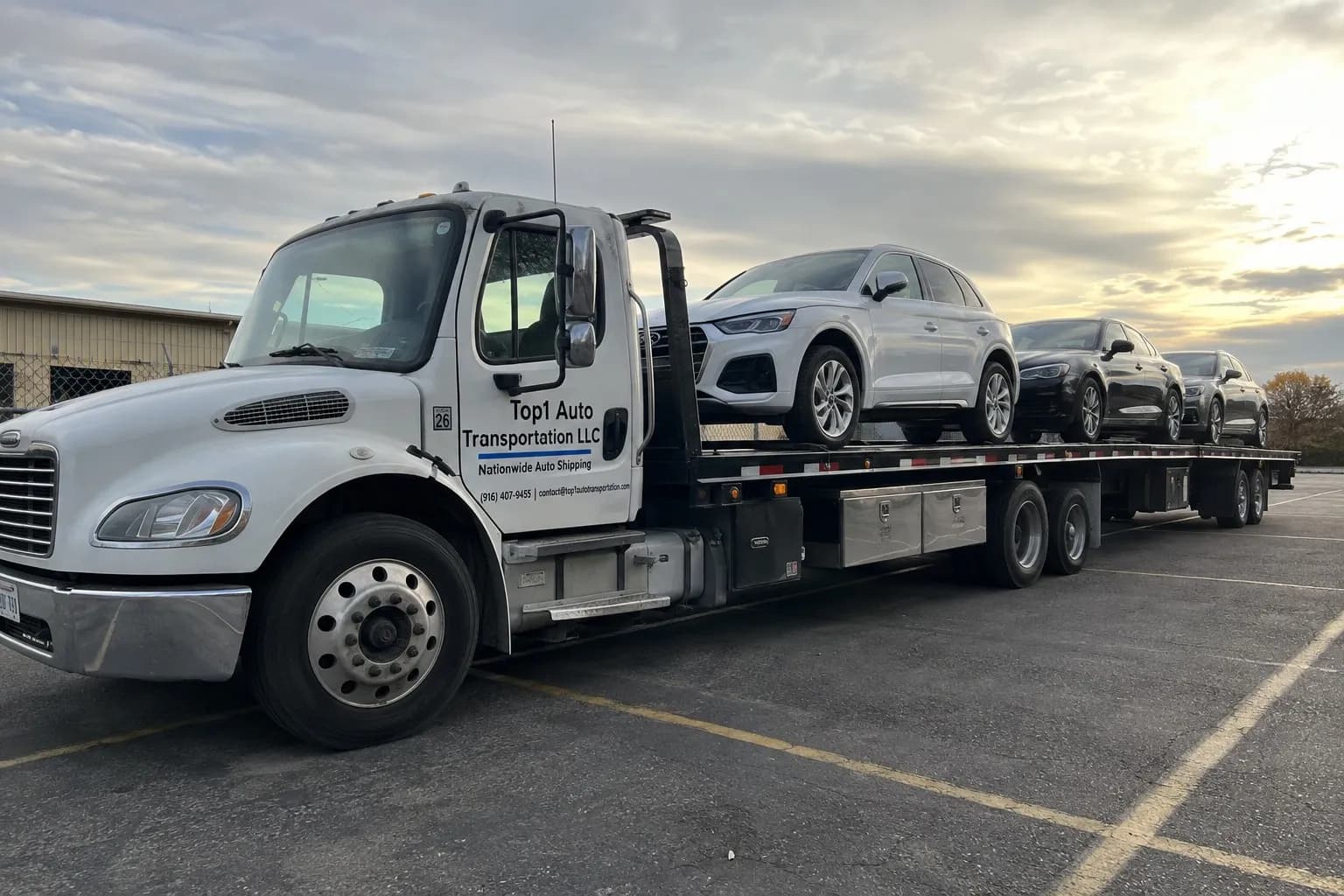
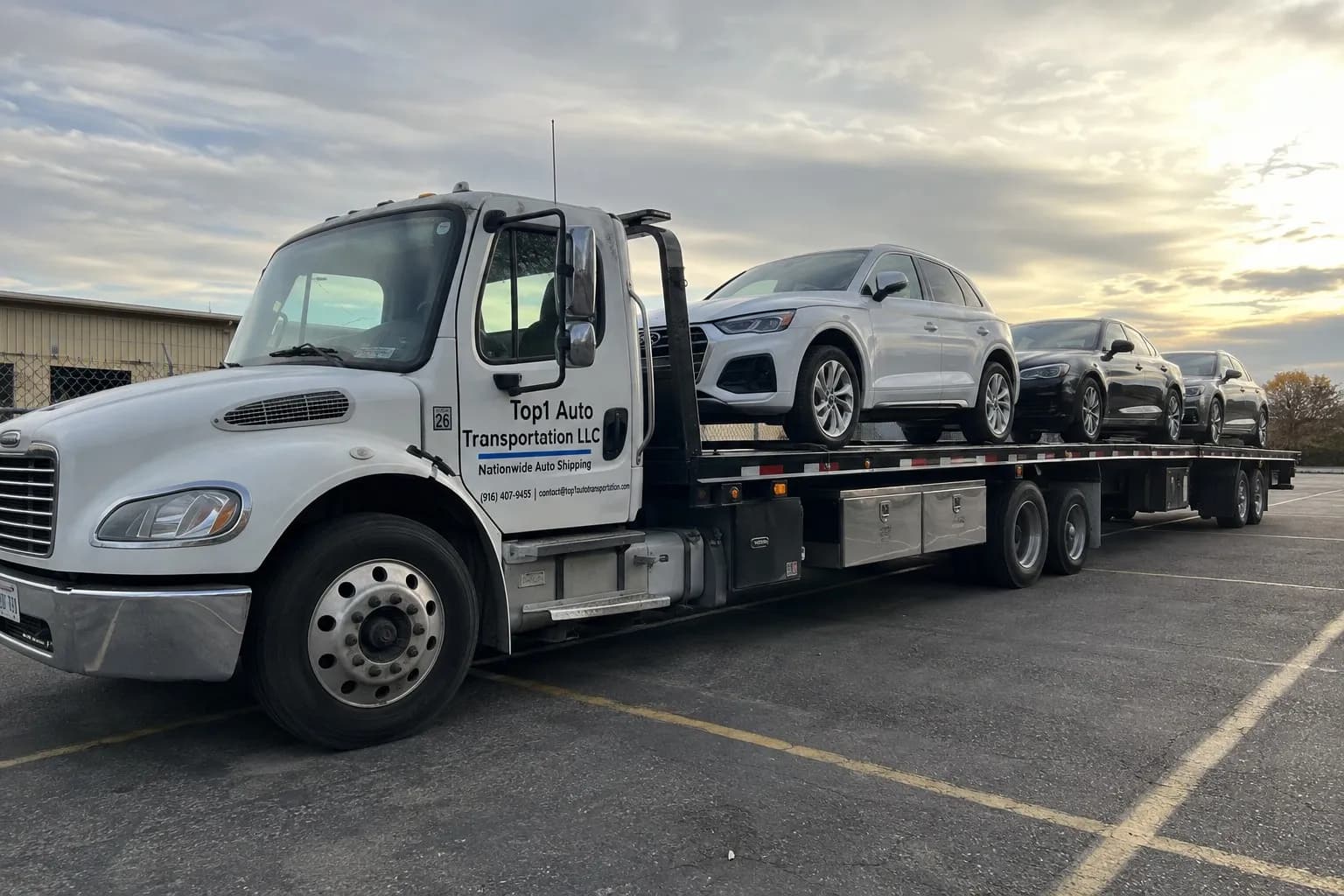
A non-running or flood-affected vehicle can be transported safely on a flatbed or trailer without being started, which protects it from the exact damage that driving or improper towing can cause. If you're coordinating a repair estimate from a shop that isn't local, or moving the vehicle to a specialist after a total-loss decision, this is generally the safer and more practical option than trying to get it running just long enough to drive there.
Need to move a flooded or non-running vehicle to a repair shop, specialist, or new location? Get a quote from Top1 Auto Transport for safe transport that doesn't require the vehicle to start or run.
Frequently Asked Questions
- How much does it cost to get a flooded car repaired?
- Costs typically range from $200 to $600 for minor water intrusion, $1,500 to $4,000 for cabin flooding, and $4,000 to $10,000 or more for severe cases involving the engine or dashboard-level electronics. Higher-end cases often end in a total loss instead.
- Is it worth getting a repair quote on a flooded car?
- Yes, even if you expect the outcome to be a total loss. A documented professional estimate is usually required by insurers and gives you a clear basis for the claim, rather than relying on a rough guess.
- Should I get more than one repair quote?
- It's a good idea, especially if the first estimate is close to your vehicle's value. Flood damage assessment varies by shop experience, and a second opinion can catch things the first missed or confirm the number is accurate.
- Can I drive my car to get a flood damage quote?
- It's not recommended if the engine may have taken on water. Towing or hauling the vehicle avoids the risk of causing hydrolock damage on the way to the shop.
- What's the difference between a repair quote and an insurance total-loss decision?
- A repair quote comes from a shop and reflects what it would cost to fix the vehicle. The total-loss decision comes from your insurer, who compares that quote to the car's actual cash value using a state-specific threshold.
- How do I move a flooded car that doesn't run?
- A flatbed tow truck or a non-running vehicle transport service can move it without starting the engine, whether it's going to a repair shop, a specialist for a second opinion, or a storage location.