
How to Choose a Car Shipping Company in the US: What to Check Before You Book
Learn how to verify FMCSA licensing, spot red flags, and tell brokers from carriers before you book. What to check when choosing a US car shipping company.
- Buying Guides
- Safety
- How It Works
- FMCSA
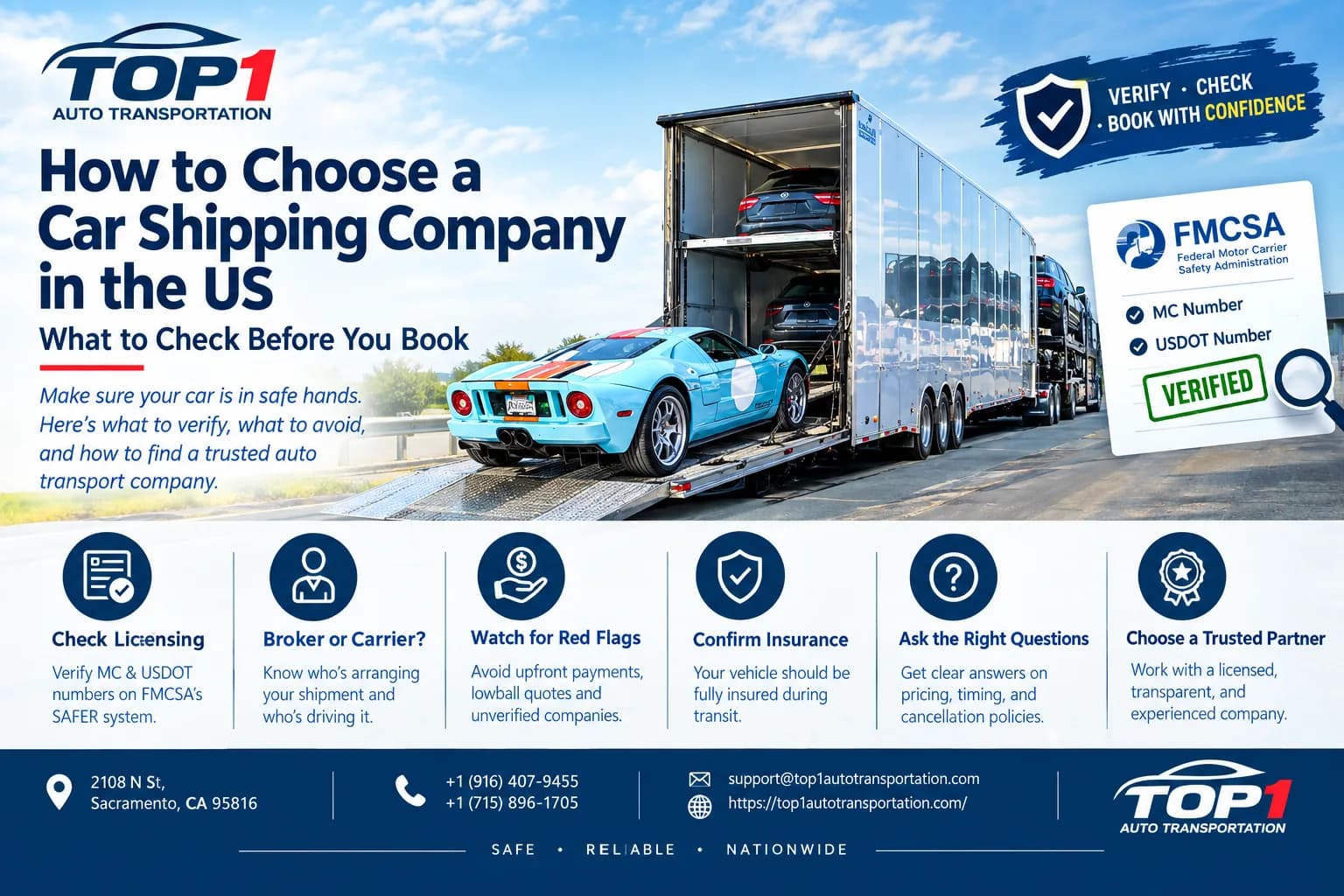
The most important thing to check before booking with any car shipping company isn't the price — it's whether the company is actually licensed to arrange vehicle transport in the United States. A surprising number of complaints in this industry trace back to the same root cause: someone booked with a company that wasn't properly licensed, insured, or transparent about how the process works. Here's what actually separates a trustworthy auto transport company from one that isn't, and how to check for yourself in a few minutes.
Quick facts: choosing a car shipping company
| What to verify | Why it matters |
|---|---|
| MC + USDOT numbers | Federal licensing through FMCSA |
| Broker vs. carrier role | Who arranges vs. who drives |
| Active SAFER status | Confirms the company can legally operate |
| Payment timing | Legitimate brokers collect after carrier assignment |
| Insurance during transit | Coverage if something goes wrong |
Ready to compare a quote from a licensed broker? Get a free car shipping quote.
Broker vs. Carrier: What's the Difference
Most companies you'll find searching for car shipping are brokers, not carriers. A carrier is the company that physically owns the trucks and drives your vehicle. A broker arranges the shipment on your behalf, matching you with a vetted carrier from a network, handling the quote, scheduling, and communication so you don't have to negotiate directly with individual truck owners.
Neither model is inherently better. What matters is that the company, whichever role it plays, is properly licensed for that role and transparent about which one it is. A broker should tell you upfront that it's arranging the shipment rather than driving it, and should be able to name or connect you with the actual carrier handling your vehicle.
How to Verify a Company Is Actually Licensed
Every legitimate auto transport company operating in the US, whether broker or carrier, should have both an MC number (Motor Carrier number) and a USDOT number issued by the Federal Motor Carrier Safety Administration. These aren't optional extras. They're the federal registration that makes the company legally allowed to operate.
You can verify any company's numbers yourself, free, in about a minute:
- Go to the FMCSA's SAFER system at safer.fmcsa.dot.gov.
- Search the company name or enter its MC or USDOT number directly.
- Confirm the operating status is active and the authority type matches what the company claims to be — broker or carrier.
- Check that the company name in the FMCSA record matches the name you're being quoted by.
If a company can't provide these numbers when asked, or the numbers don't check out, that's a hard stop. Don't book.
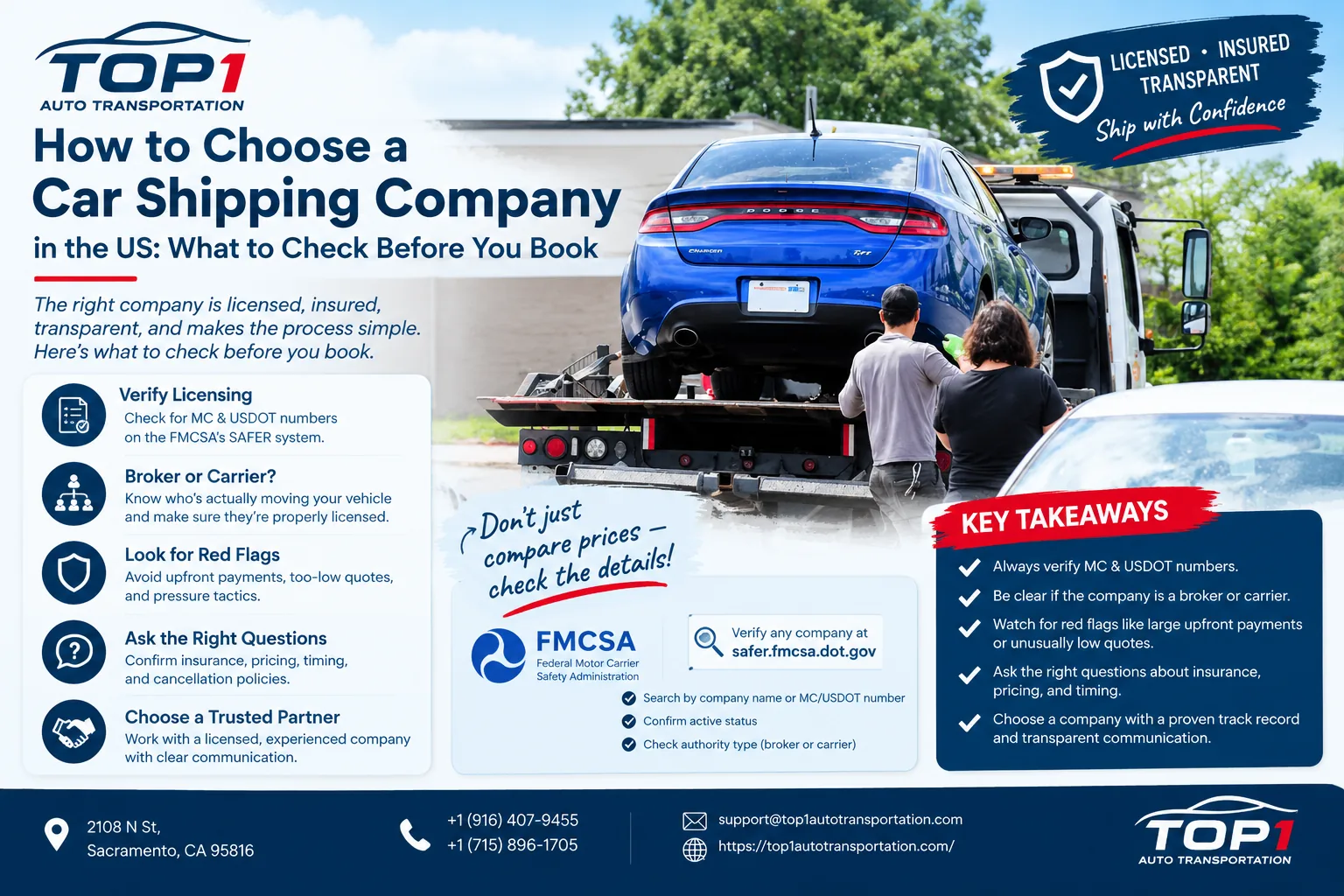
Red Flags to Watch For When Comparing Companies
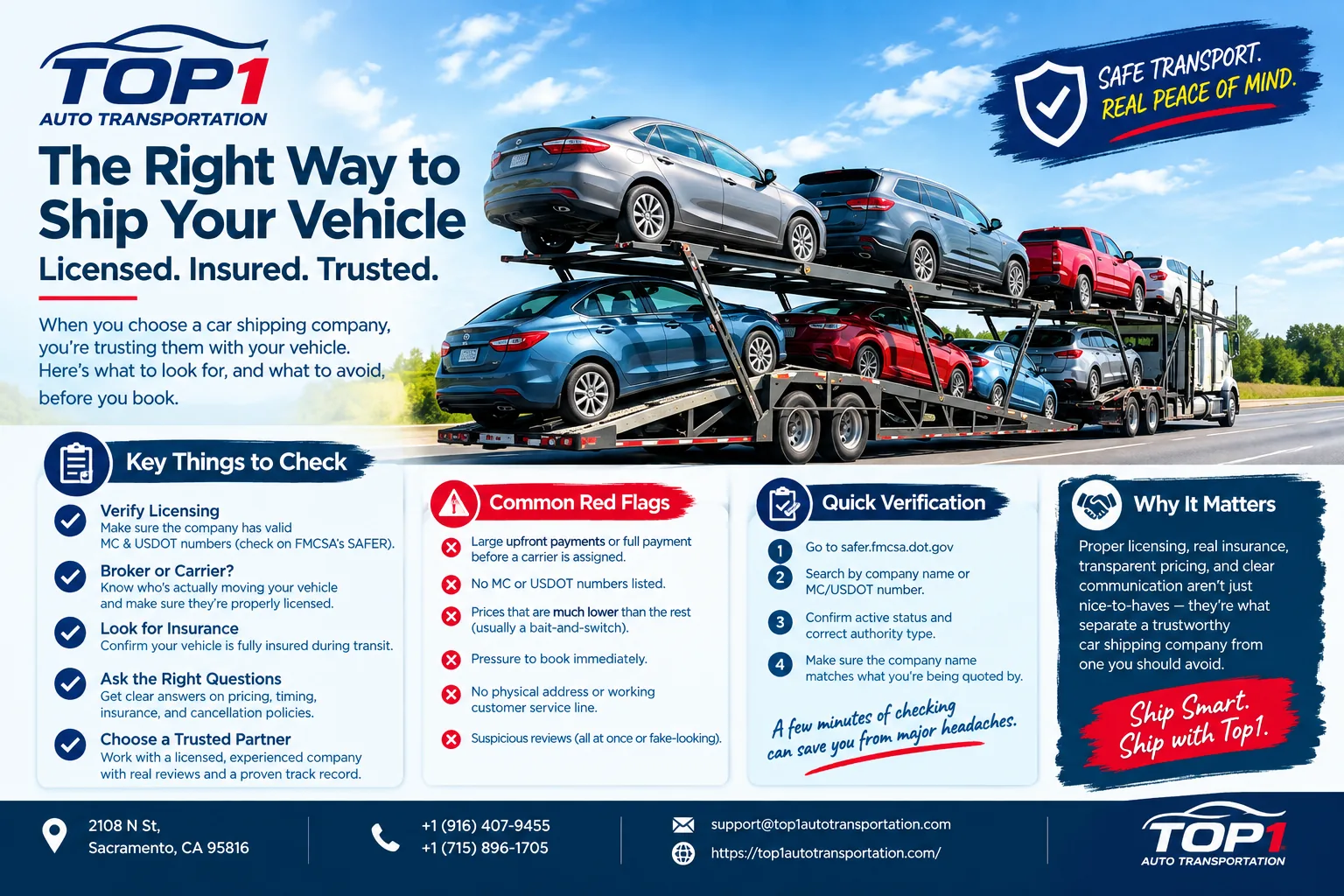
- A large upfront deposit or full payment before a carrier is even assigned. Legitimate brokers generally collect payment once a driver is booked, not before.
- No MC or USDOT number listed anywhere on the website or in written communication.
- A quote significantly below every other quote you've received for the same route and vehicle. Auto transport pricing tends to cluster within a predictable range for a given distance, and an outlier that's far cheaper is often a sign of a bait-and-switch pricing tactic, where the real price climbs once you're committed.
- Heavy pressure to book immediately, especially combined with claims that a price will disappear within hours.
- No verifiable physical address or a customer service line that never gets a live answer.
- Reviews that seem to appear all at once in a short window, or an unusually large gap between glowing testimonials on the company's own site and its independent reviews elsewhere.
What "American" Actually Means for a Shipping Company
If you're specifically looking for an American car shipping company, it's worth being clear about what that should mean in practice. Every legitimate broker or carrier operating across US states is required to be federally licensed through the FMCSA regardless of how patriotic its branding is. A company name or logo built around American imagery doesn't tell you anything about licensing, insurance, or reliability. Those come down to the FMCSA verification above, not the name on the website.
What genuinely matters is straightforward: proper federal licensing, transparent pricing with no bait-and-switch, real insurance coverage on your vehicle during transit, and a company that's upfront about being a broker or a carrier from the start.
Questions Worth Asking Before You Book
- Can you provide your MC and USDOT numbers so I can verify them?
- Are you the carrier, or are you arranging this through a network of carriers?
- What's included in the quote, and what could cause the price to change?
- What happens if the assigned carrier's pickup date changes?
- What insurance coverage applies to my vehicle during transit, and what's the deductible if something goes wrong?
- Is there a deposit required, and when is the balance due?
What Sets Top1 Auto Transportation Apart
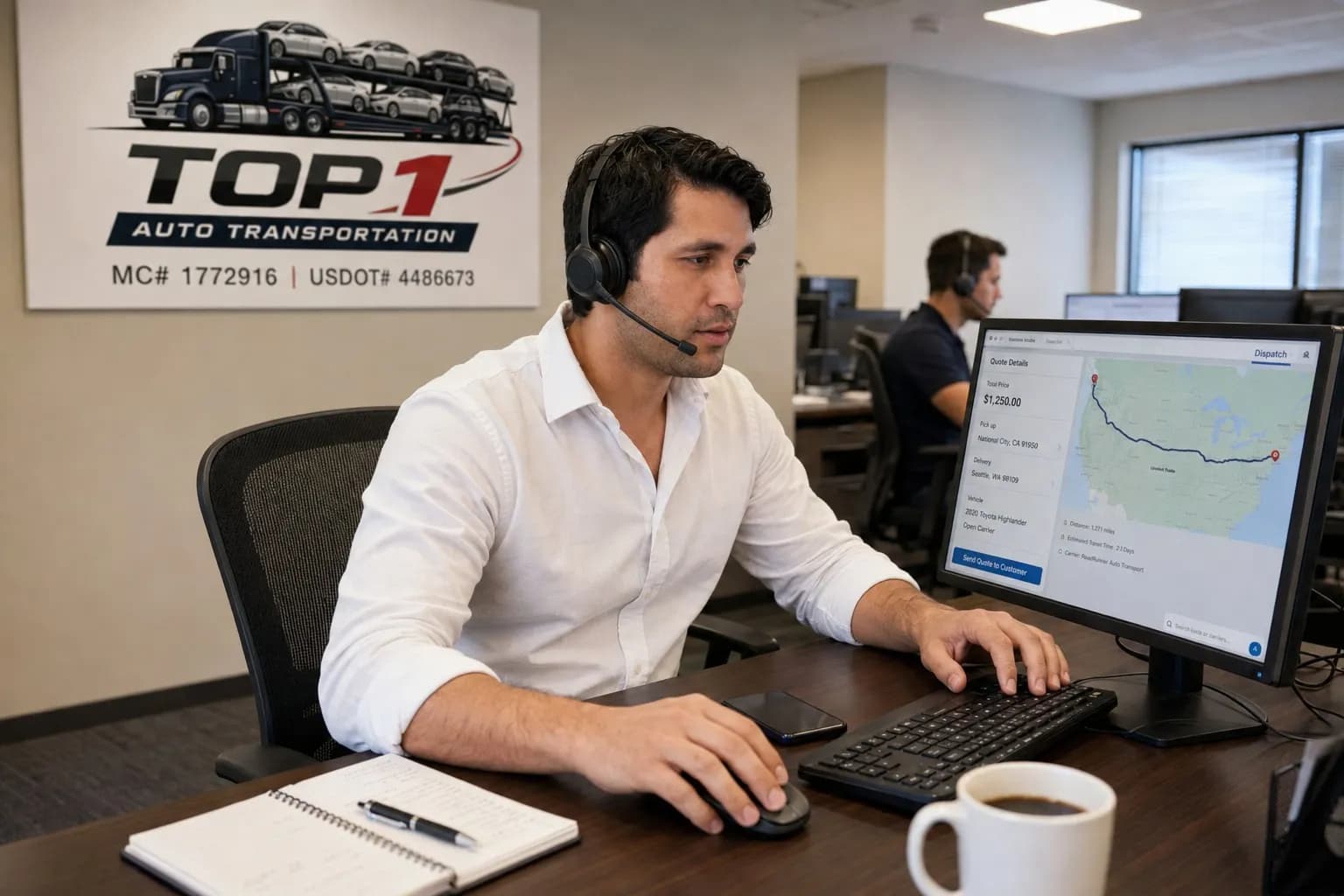
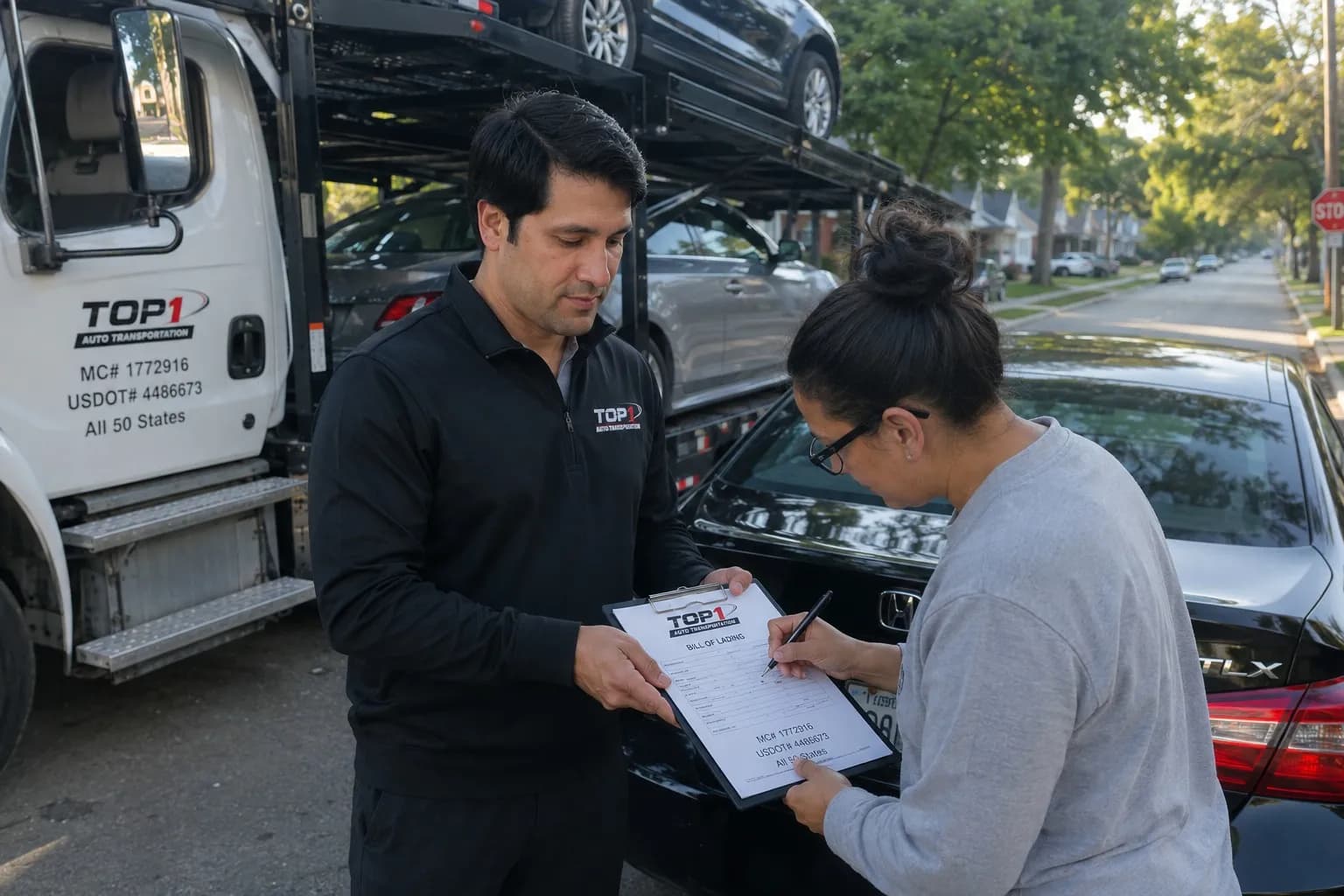
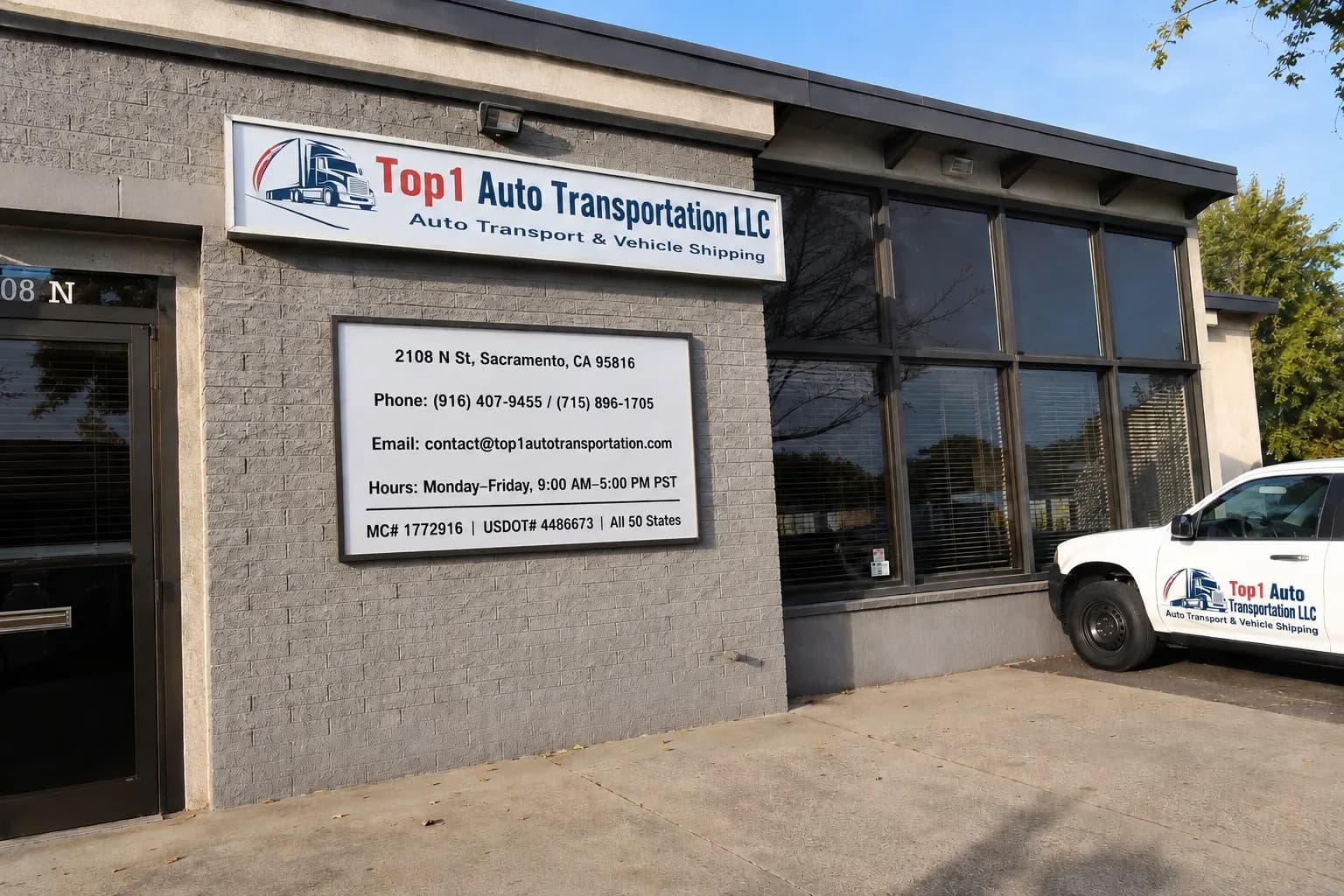
Top1 Auto Transportation is a licensed FMCSA broker, MC# 1772916 and USDOT# 4486673, both verifiable directly through the FMCSA's SAFER system. There's no upfront payment on any shipment. You pay only once a vetted, FMCSA-licensed carrier is assigned to your route. The company has coordinated more than 14,000 vehicle shipments nationwide, and the same advisor stays with you from your initial quote through delivery, rather than passing you between different representatives at each step.
You can see the full process on our how it works page, or get a free quote to compare pricing for your specific route.
Domestic Shipping vs. Shipping a Car Overseas
It's worth drawing a clear line here, since domestic and international vehicle shipping are genuinely different processes. Shipping a car between US states — the kind of service covered throughout this site — involves a truck-based carrier picking up and delivering the vehicle door-to-door.
Shipping a car overseas, to a territory like American Samoa, or to another country like the UK or Barbados, works differently. It typically involves ocean freight through a specialized international freight forwarder rather than a standard domestic auto transport broker, along with customs documentation, import regulations specific to the destination country, and often a longer, less predictable timeline. If you're researching an overseas shipment, look specifically for a company or forwarder experienced in international vehicle export, since the licensing, insurance, and process requirements differ from domestic interstate shipping.
Ready to compare a real quote from a licensed, verifiable company? Get a free quote or talk to a Top1 advisor about your route and vehicle.
Frequently Asked Questions
- How do I know if a car shipping company is legitimate?
- Verify its MC and USDOT numbers directly through the FMCSA's SAFER system, confirm its authority status is active, and check that it doesn't require full payment before a carrier is assigned.
- Does a company need "American" in its name to be trustworthy?
- No. A company's name or patriotic branding says nothing about whether it's properly licensed or insured. FMCSA registration is what actually matters, and any company operating legally in the US, regardless of its name, is required to have it.
- What's the difference between a broker and a carrier?
- A carrier physically owns and drives the trucks that transport vehicles. A broker arranges the shipment by matching you with a vetted carrier from a network. Both need proper FMCSA licensing for their specific role.
- Can I ship an American car overseas, to the UK or a territory like American Samoa?
- Yes, but it's a different process from domestic interstate shipping. It generally requires an international freight forwarder, ocean shipping, and customs documentation specific to the destination, rather than a standard domestic auto transport broker.
- What should I do if a company asks for full payment upfront?
- Treat it as a warning sign. Most legitimate brokers collect payment once a carrier is assigned and scheduled, not before a driver is even confirmed.
- Is a lower quote always a red flag?
- Not always, but a quote significantly below every other estimate for the same route and vehicle is worth extra scrutiny. It can sometimes indicate a price that will increase later, once you're already committed.